The Story of PDF: From Paper to Digital Universality
onzlabs
July 10, 2024
3 min read
Explore the fascinating history and evolution of the Portable Document Format (PDF), from its origins in Adobe's "Camelot Project" to its current status as a universal standard for document exchange.
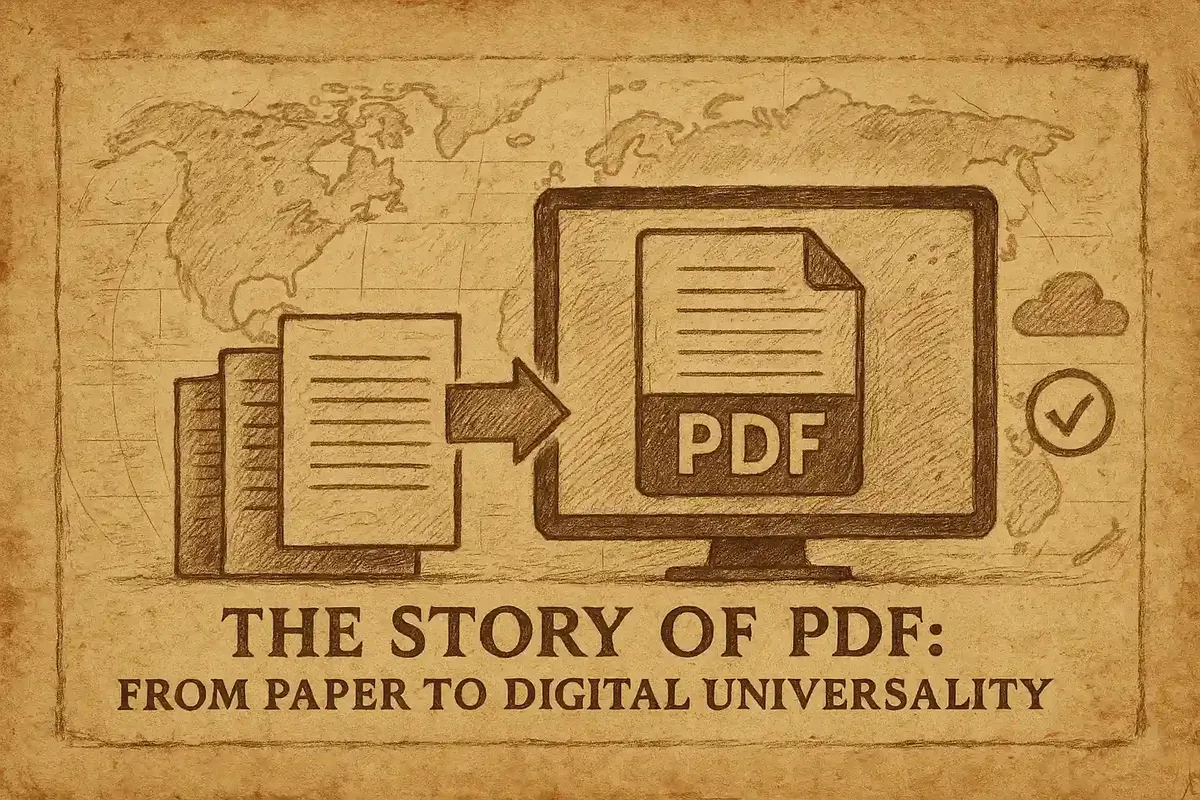
In an increasingly digital world, the Portable Document Format (PDF) stands as a cornerstone of document exchange. But how did this ubiquitous file format come to be, and what makes it so indispensable today? Join us as we delve into the fascinating history of PDF, its evolution, and the myriad ways it helps individuals and organizations worldwide.
The Genesis: Adobe's Vision for "The Camelot Project"
The story of PDF begins in the early 1990s with Adobe co-founder John Warnock's vision for what he called "The Camelot Project." The goal was ambitious: to create a universal file format that would allow documents to be viewed and printed on any computer, regardless of the operating system, application software, or fonts used. This was a revolutionary idea at a time when document sharing was a chaotic mess of incompatible formats and rendering issues.
In 1993, Adobe officially launched the Portable Document Format (PDF) along with Adobe Acrobat, the software suite for creating and viewing PDFs. Early adoption was slow, partly due to the cost of Acrobat and the availability of free viewers for other formats. However, Adobe's persistence and the format's inherent advantages gradually led to its widespread acceptance.
Key Innovations and Evolution
PDF's success can be attributed to several key features:
- Platform Independence: The core promise of PDF – that a document would look the same everywhere – was a game-changer.
- Self-Contained: PDFs embed all necessary fonts, images, and graphics directly within the file, ensuring consistent rendering.
- Security Features: From the outset, PDFs offered robust security options, including password protection, encryption, and digital signatures, making them ideal for sensitive documents.
- Interactivity: Over time, PDFs evolved to support interactive elements like forms, hyperlinks, and multimedia, transforming them from static documents into dynamic tools.
- Open Standard: In 2008, PDF was officially released as an open standard (ISO 32000-1:2008), further cementing its role as a universal format and encouraging broader adoption and development.
How PDF Helps Everyone Today
Today, PDF is indispensable across countless domains:
- Business and Legal: Contracts, invoices, reports, and legal documents are routinely shared and archived as PDFs due to their integrity and security features.
- Education: Textbooks, research papers, and assignments are distributed in PDF format, ensuring consistent presentation for students and educators.
- Government: Official forms, publications, and archival records are often in PDF, facilitating public access and long-term preservation.
- Creative Professionals: Designers and publishers use PDFs for proofs and final outputs, confident that their work will be displayed as intended.
- Everyday Users: From bank statements to online tickets, PDFs are a part of daily digital life, providing a reliable way to view and share information.
The journey of PDF from a visionary project to a global standard is a testament to its robust design and adaptability. It continues to be the go-to format for reliable, universal document exchange in our digital world.
Explore our PDF Merger, PDF Splitter, and PDF Protector tools to manage your PDF documents with ease!